Battle of the Yellow Sea
Overview
The Battle of the Yellow Sea, also known as the Battle of the Yalu River, was a significant naval engagement during the Sino-Japanese War (1894-1895). This battle took place on September 17, 1894, off the coast of Liaoning province, near the mouth of the Yalu River. It was a pivotal clash between the Beiyang Fleet of the Qing Dynasty's navy and the Imperial Japanese Navy, marking a turning point in the war and demonstrating the technological and strategic advancements of the Japanese naval forces.
Historical Context
The Beiyang Fleet was China's first modern navy, born out of the Qing government's determination to protect national security. From 1875 until the Sino-Japanese War's outbreak, China acquired 46 advanced warships from the United Kingdom and Germany and also developed vessels domestically. The Dingyuan, the flagship of the Beiyang Fleet, was commissioned in 1887 from Stettin, Germany, and was considered a state-of-the-art battleship of its time.
Despite these efforts, the Battle of the Yellow Sea remains a somber chapter in Chinese history. The Beiyang Fleet suffered significant losses, with five ships sunk during the battle and hundreds of sailors perishing. This defeat, followed by the subsequent Battle of Weihaiwei in Shandong province, effectively annihilated the fleet and dashed the dynasty's hopes of reversing its fortunes.
Archaeological Discoveries
For over a century, remnants of the Battle of the Yellow Sea lay submerged beneath the sea. In 2014, China launched its first vessel designed for underwater research, initiating a project led by prominent maritime archaeologist Jiang Bo to uncover the fleet's material legacy. This decade-long effort resulted in the discovery of seven shipwrecks in the Yellow Sea, yielding thousands of artifacts that shed light on the battle and the sailors who fought in it.
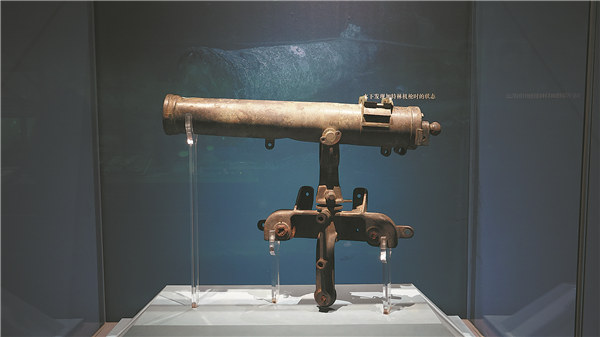
One of the most notable achievements was the study of the flagship Dingyuan. Archaeologists uncovered a significant cache of small-caliber ammunition rounds and used sonar equipment to understand the ship's hull. In 2020, they successfully raised an 18.7-ton section of the Dingyuan's main gun protective armor from beneath two to three meters of sediment.
Significance of the Findings
These findings offer invaluable insights into the battle and the broader context of East Asian maritime history. The artifacts, including weapons, ammunition, and personal items such as identity tags, porcelain bowls, leather shoes, and mahjong tiles, create a tangible connection to the past and humanize the historical record.
The discoveries also address long-standing questions about the Beiyang Fleet's preparedness for war. Contrary to public belief that the Qing government neglected naval updates, documents and artifacts indicate efforts to enhance naval capabilities, such as adding new cannons to the cruiser Laiyuan. Article reference1. Sea reveals fate of heroes. chinadaily.com.cn. 2024Photo Gallery(6 pictures)CategoriesHistoryTagHistorical EventAncient Chinese HistoryCatalogue1. Overview2. Historical Context3. Archaeological Discoveries4. Significance of the Findings- - - []








